

Why Do We Homeschool? Part 1
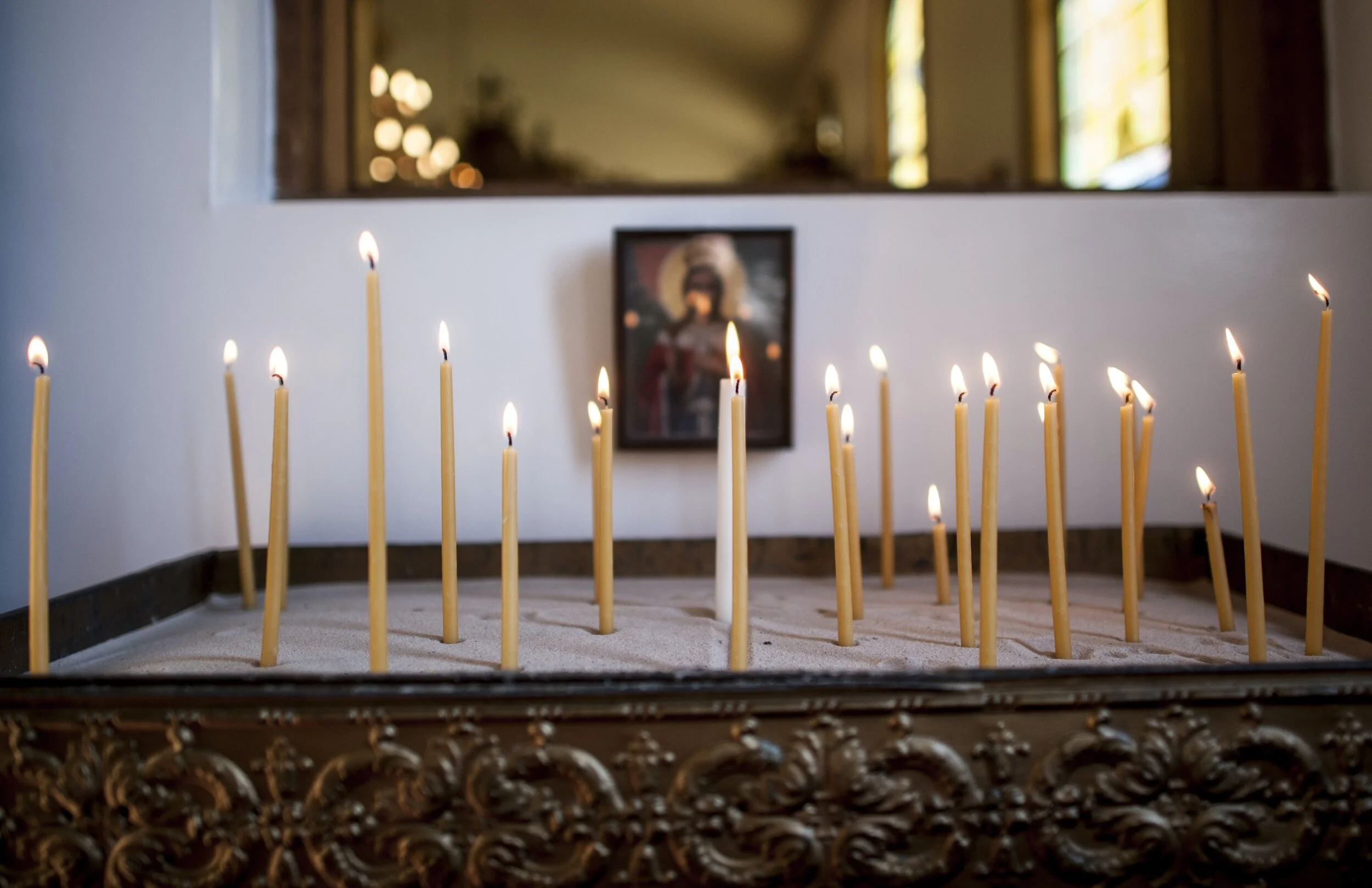
It is Holy Week, and like most of us my family is pushing through, attending daily services. Only complication: my husband and I work on average 50 hours a week, and our kids attend public school. By Thursday, my eldest, a second grader, is falling asleep in class. He tells his concerned teacher that he is tired because we have been in church every evening. To which his teacher replied: “Tell your mom school is more important than church.”
Hearing that from my child did something to me.
by Cornelia Oprea
Why do we Homeschool?
It is Holy Week, and like most of us my family is pushing through, attending daily services. Only complication: my husband and I work on average 50 hours a week, and our kids attend public school. By Thursday, my eldest, a second grader, is falling asleep in class. He tells his concerned teacher that he is tired because we have been in church every evening. To which his teacher replied: “Tell your mom school is more important than church.”
Hearing that from my child did something to me. I worked for many years in public education, and encountered numerous children who, for example, attended church till midnight every Wednesday evening. My colleagues and I worked around that, just as we had to work with kids that worked every day after school or took care of their siblings while their parents worked.
While social interactions my kids had at school were not always ideal, or academics were not always pursued in the same way I would have liked, that one interaction between my son and his teacher made me understand that my children were raised by people who did not see the world as I did, and that I had no control over that. We wanted to be free to attend as many church services as possible, without my children suffering the consequences because of our decisions.
The more we paid attention, the more we noticed that it wasn’t just school. In an abundance of care for the social well being of our children and in a very Orthodox approach to life-working to do everything we do to the best of our ability-our family, as well as most families we knew, were in constant conflict between church attendance and children’s activities. From debate, to dance, to martial arts, you name it, our children had other priorities in their daily life that superseded worship. So much so that morning prayers were done in the car, rushing to make it before the last school bell, so much so that we read only the fourth prayer in the evening.
Many years ago, my husband and I attended a workshop at an Orthodox convention, where a representative of the Department of Education of the Greek Orthodox Archdiocese went over their findings from a study related to church adherence and its dismal findings. The question most clergy in attendance had was related to competing with children’s activities.
The Alternative
It has been many years since, and this Pascha, we were at Saint Constantine and Elena in Indianapolis. The church is one of the first Romanian churches in America. Dedicated and consecrated in 1911, the church has a majority convert congregation, but also includes fourth-generation members from the original founders. A true vision of the future of Orthodoxy in America.
My children would never have experienced such beauty were it not for homeschooling.
How We Got Here
The words from the Epistle of Barnabas resound: "The way of light, then, is as follows. If anyone desires to travel to the appointed place, he must be zealous in his works." For our family, travel is not just a figure of speech.
The onset of the 2020 lockdown remains etched in our memories—and while most remember the trials, my family cannot be more thankful for the blessings. As my husband devoted tireless hours in a Cancer Research hospital's clinical lab in Houston, grappling with unprecedented challenges, I faced the demands of a new school role in my public educator career of over a decade. Amidst this chaos, our first-grader and third-grader navigated the complexities of virtual learning, offering glimpses into the intricacies of remote education. Amidst the hardships, a silver lining emerged: the opportunity for our family to bond and cherish precious moments together. Daily walks and shared reading moved us to an increased comfort in being able to say farewell to virtual meetings and marked the beginning of a transformative phase.
There is no other way to describe how we were able to transition into our new life but through God’s providence.
My husband’s change in career path and obedience to God in pursuing this new career is a story on its own. And to go into too many details would either give my husband undue credit or trivialize what we perceived as God’s hand working in our lives. Suffice it to say that walking away from our professional identity helped us understand that this life we had created came across as if it was of our own merit. We were walking into a life where whatever step we took, it evidently and unequivocally depended on God.
So, we zealously travel in the path God sets out before us.
Our homeschooling came as a package. My husband travels for work, and the boys and I join him as often as we can.

Finding Community as a Homeschooler
A common struggle for homeschoolers is finding a supportive community in which to thrive. This is especially true if you attend a small parish or are a part of a church community with few homeschoolers. It is easy to feel alone and cut off from society, but that does not mean one must despair.
The desire for independence also increases as we become teens. Whether conscious of this or not, we want to stretch ourselves and practice all of the beautiful treasures our parents have passed down to us. This is good and natural. So how can we do this when we feel limited in the number of people we are surrounded by or too shy to approach those in our presence?
Juliana, Summer 2023 Intern
A common struggle for homeschoolers is finding a supportive community in which to thrive. This is especially true if you attend a small parish or are a part of a church community with few homeschoolers. It is easy to feel alone and cut off from society, but that does not mean one must despair.
The desire for independence also increases as we become teens. Whether conscious of this or not, we want to stretch ourselves and practice all of the beautiful treasures our parents have passed down to us. This is good and natural. So how can we do this when we feel limited in the number of people we are surrounded by or too shy to approach those in our presence?
While the task may seem daunting, know that our church offers us so many ways to find and embrace community, of which I’ll share a few.
Embrace the Church’s Model of Community
Modern society offers a boxed-in representation of what community ought to be. But this is not the way we were created to commune. Seek the church’s guidance of community instead. Parishioners are rightly called your parish family. Rather than seeking solely those who are your age, consider befriending all your fellow parishioners as your aunts, uncles, cousins, siblings, and grandparents.
Join a Committee or Ministry Group
Consider joining a committee or ministry group in your parish. One of the easiest ways to connect with others is to work together. It relieves the pressure of inventing something to say. It also offers opportunities to meet new people while spreading Christ’s love to others while doing His work. Those who experience toil and hardship together develop stronger bonds and laboring in this way is so good for the soul.
Embrace the Little Ones
Parenting is a huge task, so know that the parents of little ones will appreciate the opportunity to interact with other members of the parish. And if you haven’t already noticed, conversations with little ones can be quite entertaining and spontaneous. Don’t limit your interactions to Sundays either. Consider sending notes in the mail to the young members of your parish: it will enrich your coffee hour conversations by giving you more to talk about, and it will deepen the little ones’ sense of belonging—truly a beautiful treasure to offer to our youngest generation.
Remember Your Elders
Don’t forget the older members of your church community as well. They have passed on many treasures to us, and still have so much to teach us. Consider pulling up a chair and bringing a chess board. Not only will you brighten their day, but you’d also be surprised by the knowledge they pass on. These experienced parishioners also tend to have much knowledge in the art of handiwork, which is beneficial to our spiritual growth. If you have trouble with your garden, recipes, or woodwork, you may find all your questions answered by simply remembering and communicating with your elders.
Attend an Event or Conference
Let us not forget Saint Emmelia Ministries. You will find a welcoming community of other Orthodox homeschoolers. When you have the chance, attend one of the online or in-person gatherings. There are many teens just like you looking for community and attending these events. You may even discover that there are other homeschoolers living in proximity to you. You never know who your neighbor may be and what kind of friendship you may be missing.
As you seek to embrace the community that God has planted you in, remember that you are not alone. Christ is everywhere present and with us. May God bless you on your path as you embrace each one in your community as icons of Christ for His glory.
What other ways can we seek, embrace, and create community?

It's Our Job to Ruin Our Children's Education
I love to write stories about our life in Alaska; homesteading; homeschooling; home birthing; business; entrepreneurship; houses; finding out that Christ truly loved me; breaking myself of soap operas, then TV, then talk radio, then Facebook/Instagram, and finally radio music. I love writing recipes, specifically good fasting ones (hopefully I can write a cookbook, God willing!), and generally giving people practical advice on all of these topics–oh and making sure to include lots of run-on sentences! I have dreamed of being the next Orthodox Christian version of “Dear Abby”, not that I’d be very good at it: I seem to love sticking my foot in my mouth and have strong opinions on most everything....much to my husband’s chagrin.
Today, I am writing the story of how my husband tricked me into homeschooling our kids.
by Kh. Anna Phelps
My name is Kh. Anna Phelps, married to Fr. John Phelps here in Goldendale, WA at Ss. Joachim and Anna Orthodox Mission. I am currently working as a real estate agent after my husband has gone to full-time priesthood. We are originally from Wasilla, AK where we had our first 7 children. We began exclusively homeschooling them there.
I love to write stories about our life in Alaska; homesteading; homeschooling; home birthing; business; entrepreneurship; houses; finding out that Christ truly loved me; breaking myself of soap operas, then TV, then talk radio, then Facebook/Instagram, and finally radio music. I love writing recipes, specifically good fasting ones (hopefully I can write a cookbook, God willing!), and generally giving people practical advice on all of these topics–oh and making sure to include lots of run-on sentences! I have dreamed of being the next Orthodox Christian version of “Dear Abby”, not that I’d be very good at it: I seem to love sticking my foot in my mouth and have strong opinions on most everything....much to my husband’s chagrin.
Today, I am writing the story of how my husband tricked me into homeschooling our kids.
Then:
I was raised in a rural Alaskan middle-class household in a beautiful cedar-sided home that my dad mostly built himself. We shared a well with our neighbor, and that good little well produced one gallon of water per minute, but we were rich in house, in view, and in community. There were hundreds of acres of woods behind our house that were completely untouched, so exploring the birch- and spruce-filled woods with my best friend was a regular pastime. Across the street from our house was the huge church lawn where all the neighborhood kids would gather after dinner every bright summer night to play soccer until the church bells rang at 9pm, and we all went home.
To say that my upbringing was idyllic is an understatement. Most of our neighborhood went to the same church and those that were committed to the Truth joined themselves to the Orthodox Church when I was ten years old. I was blessed to attend our local church school, but when I entered seventh grade I had to attend the large public middle school that was about a half-hour bus ride away. My shy self struggled only knowing one other girl from my elementary class, unlike the other kids who were joining the large school with their other classmates from their larger elementary schools. After getting dumped by my “only friend” at school and crying most nights, dreading the next day, my parents relented and let me attend a smaller Christian school that could offer middle school grades. I attended there for the second semester but went back to the public school for 8th grade where I discovered I had made friends after all–they even asked me where I had disappeared to the year before! I was able to enter high school with a group of non-popular but kindhearted friends. Although high school was socially difficult, I was able to survive. Graduating from highschool was the second best day of my life.
Two years later:
Raymond and I were in the first Holy Cross house (1995-96) up in Eagle River, AK with Fr. Paul Jaroslaw as our priest. We were courting and quickly getting serious about marriage. He wanted to go “talk to me” about some things before we could continue our relationship. I was nervous about this talk: what is so serious that we have to have a *talk*?
We hopped into the car, and it took us up to our favorite scenic drive along the rapids of the Eagle River. We wound our way up into the Chugach Mountain range, and he began, “I would want you to be a stay-at-home mom.”
My heart almost exploded out of my chest: this is what I WANTED to do with my life. I never wanted a career, and here’s this man telling me that he can provide for me and a family and saying that he didn’t want me to go out and make money, just to simply stay home and raise our children. I readily agreed that this was a great idea.
“I want you to homeschool our children.”
“Oh no....” I said in my head. I had NEVER considered homeschooling my future children. So, I thought briefly about my own school experience: not great, definitely not a “good” place to send kids, between the foul language and the rampant sex-before-marriage problem. Simple logic made me quickly realize that I would not want to subject my future children to such things.
“But I never have wanted to be a teacher” was my next thought. I said so to my future husband. He assured me we would do it together and it wouldn’t be as hard as it sounds. I slowly agreed that this would be a wise decision in the end.
“I’d like you to be willing to be a priest’s wife; I think that I’ll be a priest someday.” My heart sank. Doesn’t he know?
“But I don’t even like going to church!” I blurted out. “I don’t know how I could ever be a priest’s wife! My sister should be a priest's wife, not me; she actually likes going to church!”
He said, “It’s ok, you don’t have to like going to church; you just have to bring the kids to church and support me.”
“Are you sure? I am not pious or any of those things that priest wives should be. I would be a disappointment.” However, deep down, hidden away in my heart, I knew that I longed for God, and I had high hopes that someday I would grow up and get serious about life and put off the “lukewarm self” that I knew me to be.
“It’s ok, it’ll still be a long time before I’m ordained. I also will need to grow up a lot. I just want a wife who’s ok with me being a priest and knows that the church will require a lot of me and my time.”
Thankfully, my parents raised me to be extremely independent. My mom had convinced me that I would need a career to help the family and that wives can no longer afford to stay at home. She taught us kids to work hard and work every day, I knew life was about working. I believed her and believed that I was facing a life of being a mom and juggling a job like she always had. So, the idea of being just a mom and being supportive of his priesthood didn’t seem nearly as daunting. I reminded him that I wouldn’t like going to church, but I’d be ok with him liking to go to church. I reluctantly agreed that I would support him becoming a priest someday.
Now:
Raymond is now Father John and he has been a priest for six years. We have graduated our four older children with high school diplomas from our homeschool named St. Paisios Academy. We have had a difficult but fruitful marriage of 26 years. I don’t hate going to church, but I’m not the best at it. I do love reading spiritual books now and I try my hardest not to be lukewarm. Ironically, I have a part-time career as a real estate agent; and I previously started, ran for 15 years, and sold a successful mailbox business.
I have discovered a few key tricks to successful homeschooling–namely find curricula that work for the teacher first, then secondarily for the child; encourage the child to love learning and school won’t be a struggle...but some subjects might be difficult and that’s ok. My main piece of advice, I learned from my husband: “It’s our job to screw up our kids’ education, not the public school’s.” Once you stop being afraid of messing up and accept the fact that you WILL make mistakes and miss a lot, you stop being afraid and just let them soak it all in. If you forget to teach them something, they will ask you later, “why didn’t you teach me (fill-in-the-blank).” You then shrug and tell them go ahead and learn about it, and they will.

A Teen's Tips for Homeschooling through High-School
High school is often the time when families shift from homeschool to "real" school (the misnomer commonly used in our house, at least, for brick-and-mortar school). I am very grateful to my parents, though, for giving me the opportunity to be homeschooled from preschool through graduation; and I believe I came out of the four years of high school a better-formed person with more knowledge and skills that will be of use to me the rest of my life than if I had gone to public school. Homeschooling has also offered me more freedom in my education and with my time than I would have otherwise had. As the oldest child in my family, there was certainly a learning curve to homeschool highschool, but it was a blessed journey! Here are some tips I learned along the way that helped me make the most of my four years of high school
by Erika, Summer ‘23 Intern
High school is often the time when families shift from homeschool to "real" school (the misnomer commonly used in our house, at least, for brick-and-mortar school). I am very grateful to my parents, though, for giving me the opportunity to be homeschooled from preschool through graduation; and I believe I came out of the four years of high school a better-formed person with more knowledge and skills that will be of use to me the rest of my life than if I had gone to public school. Homeschooling has also offered me more freedom in my education and with my time than I would have otherwise had. As the oldest child in my family, there was certainly a learning curve to homeschool highschool, but it was a blessed journey! Here are some tips I learned along the way that helped me make the most of my four years of high school:
Explore your interests
High school is a perfect time to explore your interests. Take a class, find an internship or job, do something that really interests you. That way you will get a sense of what you would like to pursue further. For example, four years ago, I saw that the Saint Raphael School offered an iconography class, and to me, an opportunity to learn iconography sounded amazing. I enrolled in the class, and have taken the subsequent levels of it every year, as well as interned with a local iconographer. I was able to try a lot of different things in high school, some I loved, some I realized weren’t for me. So, take the opportunities you’re given and try something new that excites you!
Take the initiative in your education
High school is also a great time to begin to take ownership of your own education. This is especially necessary if you are in a big family and have many siblings that also need your mom’s time and attention. Regardless, beginning to take the initiative in your education is a good growing step. Don’t just sit through classes and do your homework because "your mom told you to." Set your own goals and motivate yourself. Say to yourself: I want to study these subjects and perform well in them so that [insert future goals here]. This is not to say that you shouldn’t take the classes your parents tell you to take and put care and effort into them! My point is rather that you should take the beginning steps towards owning your education.
Create a schedule for yourself
Being organized is really key to staying on top of everything. Especially if you are juggling different classes, extracurricular activities, a job or other responsibilities, it is helpful to have it all written out. I have also found it helpful to create a daily schedule to make the most of every day—outlining when you’ll get up, say your prayers, work out, do your math homework. A schedule makes for a more productive day and helps build self-discipline!
Work hard
I cannot understate the importance of hard work. If you want certain results—from classes or from anything in life—the only factor you can control is yourself: how much time and effort you put in. If you want to be good at an instrument, you need to practice, practice, practice. If you want to be good at a sport, you need to practice. If you want to excel at school or whatever else you are pursuing, you need to put in that same kind of focused time and energy; that is, you need to work hard at it! Of course, hard work doesn’t guarantee anything because we can achieve nothing by ourselves: God gives us the strength and grace for our work, and if the results are what we were striving for, glory to God. But if it doesn’t go the way we planned, thank God, His plan is always better.
Do something else
As a homeschooler, it can be easy to not do much outside of school, but a variety of activities helps to create balance in our lives. I have always been better off when I have other things that get me moving and out of the house to balance school. And the harder I work at school, the more I have found this to be true. Whether it be a sport, job, book club, or something else, it is healthy to have balance in your life and to get out from your desk and do something else. Balancing your life means that you give attention and care to all aspects of yourself: mind, body, and soul. If you do nothing but school, you will be giving all your time to your mind, but neglecting the rest of your person!
Take advantage of your flexibility
Take advantage of the flexibility you have as a homeschooler! For me, flexibility was one of the greatest benefits of being homeschooled. I loved being able to take my school and classes with me wherever we went. Our family was so blessed this past October to be able to take a cross-country road trip, something we certainly could not have done if we were not homeschooled. Also this past year, I spent two weeks at an Orthodox brick-and-mortar school, observing and helping out, another opportunity that was only possible because of the flexibility of homeschool. So, however you and your family are able, be creative and take advantage of all the opportunities that present themselves as a result of your "non-conventional" schooling!
These are a few things that have helped me succeed in high school as a homeschooler. Many of them are also important life lessons that will continue to help me in whatever I am pursuing in life! I owe a big thank you to my parents for homeschooling me in high school. I hope that you find some of these tips helpful for your own homeschool high school endeavors; thank God if you do!
Why Are Many Orthodox Families Turning Towards Homeschooling?
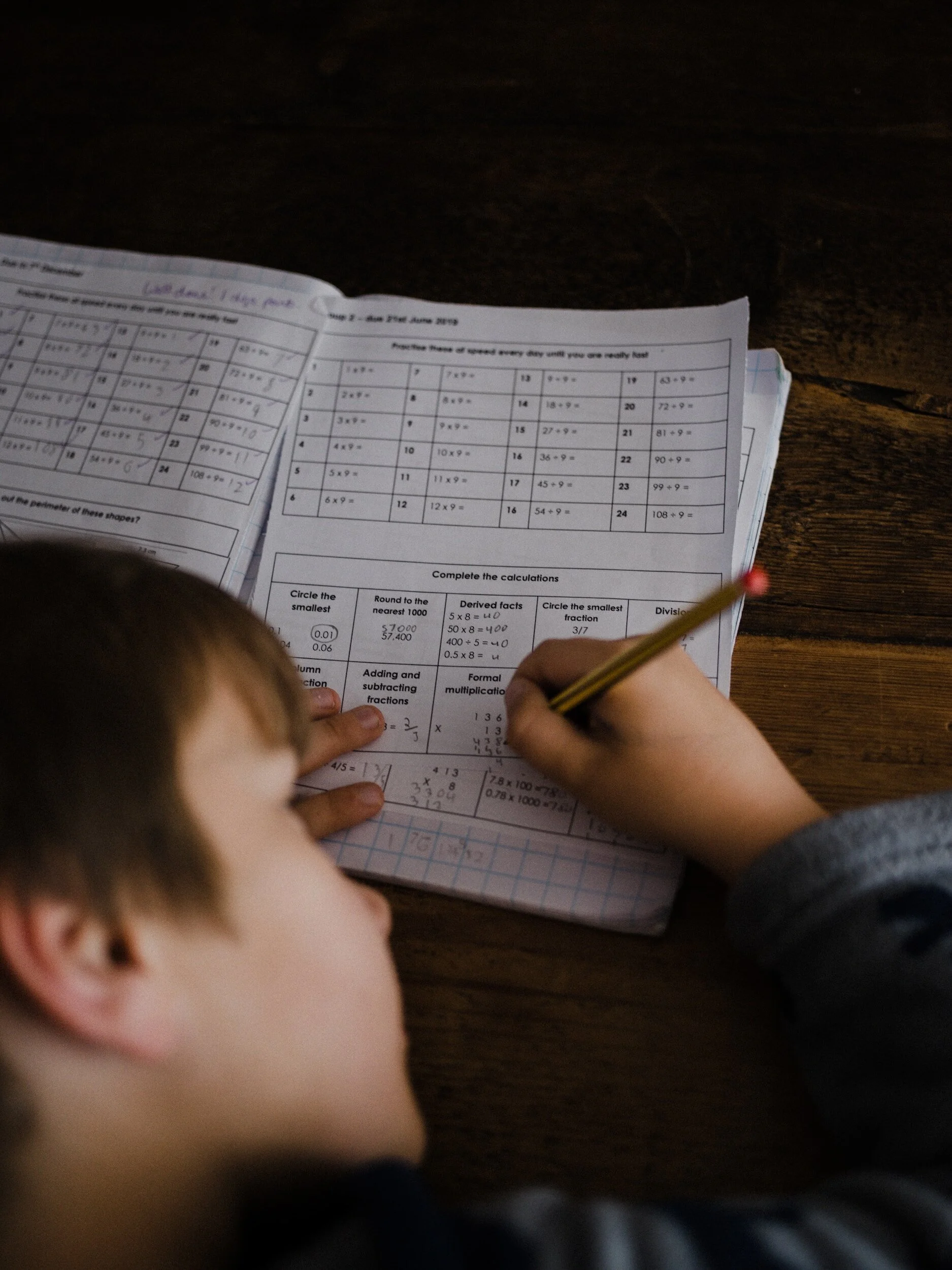
Why are many Orthodox families turning towards homeschooling their children?
As the Director of an online school for homeschooling families, I talk with many parents of homeschoolers, and I also work directly with their children, so I have a unique window into the lives of these families.
It’s important to recognize that families across the nation and the world choose homeschooling for a multitude of reasons.
by Adam Lockridge
Note: this post was originally published on oca.net.
Why are many Orthodox families turning towards homeschooling their children?
As the Director of an online school for homeschooling families, I talk with many parents of homeschoolers, and I also work directly with their children, so I have a unique window into the lives of these families.
It’s important to recognize that families across the nation and the world choose homeschooling for a multitude of reasons.
Military families that regularly move may desire more consistency in their children’s schooling, and homeschooling offers an attractive way to stabilize their educational program.
Parents with children who have special needs often find that school districts simply can’t or won’t accommodate their unique needs.
Children who are gifted in a particular way–musically, academically, artistically, or athletically–may need a more flexible educational schedule in order to advance to their highest potential.
Some schools are unsafe of feel threatening to the child. Students who can’t escape a threatening situation at school, such as bullying, may find escape by learning in the peace and quiet of their own home.
Religious families–and this is an increasingly common reason–often feel that the public schools have broken their trust by training their children in ways that overtly contradict the core values of the family.
There are probably some homeschool families who reject the idea of institutionalized schooling altogether, but I’ve never heard that cited as a reason to homeschool. The common denominator in the homeschooling movement, as I see it, seems to be a highly responsible, independent, do-it-yourself attitude. Abuses exists, as they do in schools. The overwhelming majority of families, however, seek customization, choice, and quality which can only be obtained by setting upon the task themselves. Most do not see this arrangement as ideal, but it is often the only acceptable choice that families have available.
As an Orthodox school, you probably see many families who are choosing homeschooling for religious reasons. Can you tell me more about what motivates them in particular?
I do hear from many Orthodox families who feel that public schools are no longer a viable option. Although I can’t speak for all of them, I do observe patterns.
From the perspective of many religious families, public schools have become functionally atheistic. While parents may not use this language to describe their dilemma, I think the phrase gives a name to a specific and widespread concern. Schools may not openly advocate for atheism as a philosophy (although many do exactly that), but it is undeniable that the adults who spend the most time with our children–teachers, coaches, and other school faculty–engage in a systematic omission by neglecting the everyday spiritual and moral needs of children. Under the banner of inclusiveness and pluralism, this unbreakable code of silence in moral and spiritual matters amounts to child neglect in the core facets of their being.
Children learn by imitation. In public schools, students daily observe and imitate adults who are required by the state to act as if God does not exist. Public school teachers may “love” children with a kind of natural affection, but functionally they are forced to neglect them. Teachers and faculty must refrain from prayer, eliminate all displays of religious piety, and strictly avoid advocating moral or spiritual principles. This is particularly unacceptable in the humanities, such as history and literature, but this functional atheism extends into science, art, music, and even athletics.
Children spend vast amounts of time at school. Longer school hours, demanding extracurricular activities, huge homework loads, and the looming threat of competitive college admissions, have conspired to pressure parents to relinquish opportunities to meet the spiritual and moral needs of their own children.
The overextension on the part of schools, combined with pervasive functional atheism, forces many religious families, including Orthodox Christians, to opt out of the system entirely.
What do parents need to homeschool their children?
The resources available for homeschooling are vast, and parents will find no lack of options for creating a plan that works for their kids. Free online resources abound, and many high quality products–online courses, curricula, and books–can be purchased at a tiny fraction of the price of private school.
The largest obstacle for most families is making choices within the vast arena of options. Connecting with other families who are homeschooling through friendships, churches, and co-ops can be an important source of experience and encouragement.
Finally, it is worth noting that parents do not need to be experts on any given subject to successfully homeschool. Any skillful and experienced teacher will tell you that the most important skill in teaching is relational rather than intellectual. Getting to know your child and intentionally cultivating a good relationship with him or her is the only required discipline of a homeschool parent. Fortunately, on the job training will happen naturally with the attentive and engaged adult.
Are kids isolated when they aren’t in public school?
I speak with homeschooling students every day, and I am constantly amazed at their ability to engage in thoughtful discussions and interact with one another and adults. I’ve taught in school environments, and by and large the students were far less mature and socially adjusted.
One reason for this, I believe, is that homeschool students often spend significantly more time with a wider variety of relationships. They learn not only how to be peers, but also how to interact with children of other ages; they constantly speak one-on-one with adults (impossible for teachers with twenty, or thirty, or even more students); and they face fewer pressures to conform to passing fads and fashions.
Isolation can happen in a crowd probably more easily than in a smaller group of family and friends. In this respect I would say that social isolation could possibly be a bigger problem in the crowded public schools than in the more personal and intimate society of family and friends found in homeschools across the country.
Are homeschooling students successful?
The most well-documented fact, and the one most often ignored, is that homeschooling students perform significantly better than their public school peers in academics, including standardized testing. But performance and perceived performance are not the same thing. Some schools and even employers look with skepticism on a homeschool diploma. As homeschooling becomes more widely accepted and understood, the risk of being denied opportunities as a result of homeschooling has faded, and now homeschooled students are sometimes preferred to their public school counterparts.
But academic metrics miss the most important motivator for many homeschooling families. Families who choose to homeschool almost always have a different measure of success than economic incentives such as college admissions and career advancement. Success for these families would include practical concerns such as getting a good job, but they would also consider less objective but equally important emotional, moral, and spiritual measures of success. On this level, it is not even possible to compare the success of public school and homeschooling as they differ in their aims.
Are there any drawbacks or common pitfalls of homeschooling?
The most common drawback, which is true of any counter-cultural do-it-yourself option, is an inevitable periodic crisis of confidence that homeschool parents face–mothers in particular. Many of us who were raised in a different educational system face worries that we will fail. This desire to succeed is a healthy concern, but it needs to be managed by frequent intentional reminders of the motivation for homeschooling and a balanced perspective on expected outcomes. This long view of homeschooling is difficult to maintain, but it is absolutely essential.
Another drawback is the financial sacrifice. Most homeschooling families must be or become single-income families, as one parent must stay at home and teach the children. States offer huge incentives to enroll in public schools by funding tuition through taxes, so families are also leaving on the table a monetary value of sometimes $10,000 or even $15,000 per year in schooling expenses. This economic loss could total hundreds of thousands of dollars over the life of the family, and this is a price many families are unable or unwilling to pay.
One common mistake I see homeschooling families make is modeling their homeschool on the curriculum of the public school system. The public school is structured to treat all students the same, which means that variety and customization are impossible in most cases. It is the “fast-food” schooling option. Homeschool families have an opportunity to create a beautiful, homemade, and fully customized curriculum, but they often resort to trying to replicate what is being done in the local public schools. Families who do this are still likely better off than their peers in public schools, but this pitfall is a lost opportunity for more.
What is the most common fear of families who are considering homeschooling as an option?
The fear of failure. When it comes to children, none of us feel like we can afford to fail.
I try to remind parents that the joy of homeschooling comes through learning alongside the students. The best teachers are the ones who always want to know more about the topic or improve their own skill. As a parent, your kids will learn by watching you. Be curious. Be attentive. Show reverence for classic literature and revel in the beauty of the natural world. If you do so in sincerity of heart and not in a spirit of control or manipulation, your love of learning will be contagious, and your kids will begin to feel that inner compulsion to learn all that they can about God’s glorious world. This makes learning not only easy, but it becomes a natural by-product of a healthy sense of wonder and a confidence that understanding is the true reward of sustained independent learning.

Where Were We Going With This?
In March 2020, I (like most people) was restless. Very rarely did I leave my one-bedroom apartment where I lived alone with my cat. On top of that, I had recently moved to a new state and hadn’t had much time to make new friends before the first round of lockdowns started. I missed attending services at my local parishes, but more than that, I missed my previous parish, which I considered my “home.”
By Mindi Popovich-Schneider, Assistant (Saint Emmelia Ministries)
In March 2020, I (like most people) was restless. Very rarely did I leave my one-bedroom apartment where I lived alone with my cat. On top of that, I had recently moved to a new state and hadn’t had much time to make new friends before the first round of lockdowns started. I missed attending services at my local parishes, but more than that, I missed my previous parish, which I considered my “home.”
I was also struggling with my job as a Children’s Librarian: I felt keenly the tension between my personal beliefs and the profession’s ethical standards. Overall, the time was ripe to consider what I wanted for my life. So I pulled out a blank notebook and began writing. On one page, I wrote that I wanted to work for the church in some capacity beyond volunteering for parish ministries. I didn’t really know what that might look like–maybe marrying a seminarian or becoming a monastic? I wrote down a few more daydreams (such as “learn to make macarons” and “publish a book”) and put the book away, whispering the prayer of the Theotokos: “Let it be done unto me according to Your will.”
At the time, I would never have imagined that God would answer that prayer in the form of Saint Emmelia Ministries, but less than a year later, I found myself back in my beloved PA, working alongside Fr. Noah, Fr. David, and our incredible team of volunteers to finish planning the 2021 Online Conference. Because Fr. Noah was the priest of my “home” parish, I had known about Saint Emmelia Ministries for a while. I had also known that I was really passionate about serving homeschool families in my work as a librarian. But who could have foreseen all the necessary circumstances–Fr. David needing to step back, my returning to PA in need of a job–would fall together at just the right time to allow me to serve the Church and homeschool families? Well, God, of course.
In the past two years since joining Saint Emmelia Ministries, I have had the privilege of watching it grow, often despite my inadvertent interference! In two years, we’ve expanded our online programs (Dad Gab, a second Moms’ Tea, Teen Poetry Night/Book Club, the St. Macrina Lecture Series), added to our personnel (the Spiritual Advisors Board and Teen Intern Program), and found new ways of supporting homeschool families (Scholarships & Grants). At the same time, Fr. Noah and I are eagerly looking ahead to everything in store for Saint Emmelia Ministries, like the expansion of our Curriculum Garden, an Alumni Association, and additional regional conferences.
All this, yet we constantly discover new needs to be met and new ways to connect with Orthodox homeschool families–not just in North America, but across the world. I’ve spoken to families in Australia, Romania, Italy, Ecuador, and the UK, just to name a few! There is so much work left to be done.
So, that brings me to why we are here right now. We hope that this blog will continue the work of Saint Emmelia Ministries by inspiring, equipping, uniting, and educating all Orthodox homeschool families. Here, you will find essays on parenting, faith, and pedagogy, alongside practical topics, like book reviews and news stories about homeschooling. Through the words of our writers, we hope that you will be strengthened in the blessed and all-important work you have undertaken in educating your children. I’m grateful that Christ has provided this opportunity to journey alongside you and your families as we discover all the wonderful things that He has in store for Saint Emmelia Ministries and our families. (Who knows? Maybe I’ll somehow even learn to make macarons!)
In Christ,
Mindi